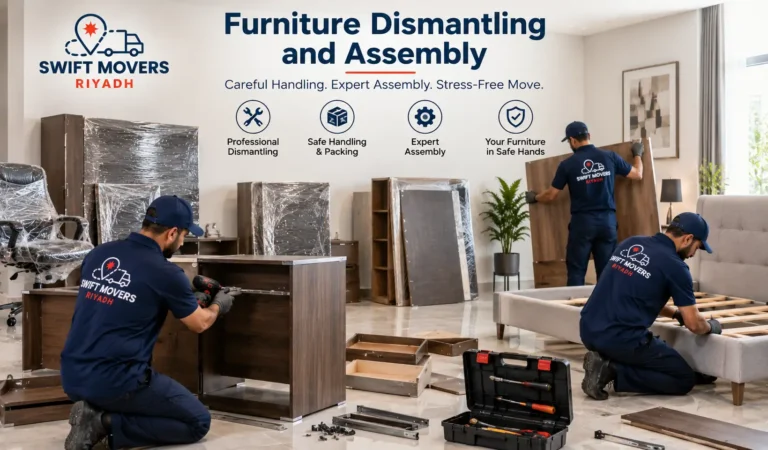
How to Move Heavy Furniture Safely Without Damage
Knowing how to move heavy furniture safely is one of those skills that looks simple until you’re actually trying to get a wardrobe through a narrow doorway or down a flight of stairs. At Swift Movers Riyadh, we see the same avoidable mistakes repeatedly, whether it’s a scratched wall, a strained back, or a sofa that barely survives the trip. Learning how to move heavy furniture the right way protects both your belongings and the people carrying them.
This guide covers practical, tested techniques for moving large furniture safely, whether you’re doing it yourself or preparing for professional movers.
Why How to Move Heavy Furniture Correctly Actually Matters
Heavy furniture movers deal with two risks constantly: damage to the item itself and damage to the space around it, whether that’s a wall, a doorframe or a floor. Rushing the process, lifting incorrectly, or skipping protective measures is usually what causes both. Understanding the right approach before moving day starts is far easier than fixing a scratched wardrobe or a dented wall afterward.
Preparing Furniture Before You Lift Anything
Most furniture moving tips start with lifting technique, but the real preparation happens before anyone picks anything up.
Measure doorways and hallways first Before moving a sofa, wardrobe or bed, measure the width of doorways, hallways and stairwells the piece needs to pass through. This single step prevents the common mistake of getting furniture stuck halfway through a doorway.
Empty drawers and remove detachable parts Wardrobes, dressers and some beds become significantly lighter and easier to maneuver once drawers, shelves and legs are removed. This also reduces the risk of items shifting and causing imbalance during the lift.
Wrap with protective blankets Protective blankets around corners and edges prevent scratches to both the furniture and the walls or doorframes it passes. This is a small step that avoids a disproportionate amount of damage.
Safely Move Furniture: Proper Lifting Technique
This is where most injuries and furniture damage actually happen, so getting it right matters more than almost any other step.
Lift with your legs, not your back Bend at the knees rather than the waist when lifting heavy furniture. This distributes the weight through your legs instead of straining your lower back, which is the most common injury when moving large furniture.
Use straps for better control Moving straps distribute weight across your shoulders and back more evenly than gripping furniture by hand, giving you better control on stairs and tighter spaces.
Move as a coordinated team Heavy furniture should never be lifted or carried by one person alone. Two or more people moving in sync, with clear communication about direction and pace, significantly reduces the risk of dropping or damaging the item.
Using the Right Equipment
A trolley or furniture dolly makes a noticeable difference when moving heavy furniture across flat, open spaces, reducing physical strain and the risk of dropping items mid-move. For furniture that needs to go up or down floors, check whether elevator access is available before committing to stairs, since stairs increase both effort and risk considerably.
Navigating Stairs, Elevators and Doorways
Stairs When moving: heavy furniture down stairs, the person below should generally support more of the weight, since gravity naturally shifts the load downward. Take stairs slowly, one step at a time, with clear verbal communication between everyone carrying the piece.
Elevators Elevators: simplify vertical movement significantly, but confirm size restrictions beforehand so you’re not stuck trying to tilt a wardrobe at an awkward angle inside a small elevator car.
Doorways Angling: furniture diagonally, rather than trying to push it straight through, often makes the difference between a smooth pass and a scratched doorframe.
Protecting Floors and Walls During the Move
Floor protection matters just as much as protecting the furniture itself. Laying down blankets, cardboard or floor runners along the moving path prevents scratches on hardwood or tile floors, particularly when furniture is being dragged even briefly.
When to Call Professional Furniture Movers
Some pieces, particularly large wardrobes, heavy sofas or antique furniture, are genuinely safer left to professionals with the right equipment and experience. Our Furniture Moving Service handles exactly this kind of heavy lifting, using straps, dollies and trained manpower suited to each piece.
Protecting Furniture With the Right Packing
Even with correct lifting technique, unprotected furniture is still vulnerable during transport. Our Professional Packing Service covers padded blankets and secure wrapping designed specifically for heavy furniture, reducing the risk of scratches or structural damage in transit.
What Professional Help Typically Costs
If you’re weighing whether to handle heavy furniture yourself or bring in help, our Furniture Moving Cost guide breaks down what typically affects pricing, so you can compare the cost against the time, effort and risk of doing it alone.
Move Heavy Furniture the Right Way
Knowing how to move heavy furniture safely comes down to preparation, correct lifting technique and the right equipment, not brute strength. Whether you’re handling a single sofa or an entire villa’s worth of furniture, taking the time to do it properly protects both your belongings and yourself.
Need Help Moving Heavy Furniture?
Swift Movers Riyadh handles heavy furniture moving daily, with the straps, dollies and trained manpower to do it safely. Get in touch for a free quote and let our team take the risk out of your next move.